

Most motorized shades run on one of four power setups: built-in rechargeable lithium-ion motors, external AA or AAA battery wands, removable rechargeable battery packs, or hardwired connections. For most homes, an integrated rechargeable lithium-ion motor is the best fit, delivering roughly 6 to 12 months between charges under normal daily use. If you want the lowest maintenance and the longest runtime, that’s the system worth asking for.
TL;DR:
- Built-in rechargeable lithium-ion motors typically last 6 to 12 months on a single charge under normal use, with longer intervals possible for smaller shades.
- External AA or NiMH battery wands require frequent replacements every few months, especially in high-cycle or larger shades.
- Cold temperatures, weak wireless signals, and shade size or weight can significantly reduce battery life and increase maintenance needs.
- Proper battery maintenance includes using manufacturer-recommended chargers, avoiding mixing chemistries, and removing batteries during long vacancies to prevent damage.
- For high-traffic or year-round cold spaces, hardwired power setups may offer more consistent performance than batteries.
Table of Contents
- What Types of Batteries Do Motorized Shades Use?
- How Long Do Motorized Shade Batteries Actually Last?
- How Do You Maintain and Charge Shade Batteries Correctly?
- What Are the Signs of a Low Battery, and How Do You Replace It?
- How Do You Choose the Right Power Setup for Your Windows?
- A Straight Answer From Someone Who Installs These Every Week
- Get a Free In-Home Consultation for Motorized Shades
- Sources
- FAQ
What Types of Batteries Do Motorized Shades Use?
Walk into most homes with motorized shades today and you’ll find one of a few setups powering the motor. Understanding which one you have determines how you’ll maintain it, and how much it’ll cost you over time.
Built-in lithium-ion motors house the battery inside the roller tube itself. You recharge them with a small magnetic or USB connector, similar to charging a phone, and they generally deliver the longest runtime with the least upkeep of any option on the market.
External battery wands use standard AA or AAA cells, either disposable alkaline or rechargeable NiMH, loaded into a tube that mounts near the headrail. Somfy’s WireFree lineup includes both rechargeable tubes and reloadable AA versions, and Hunter Douglas offers a comparable wand option for PowerView shades. Wands cost less upfront but mean more frequent battery swaps.
Other options worth knowing:
- Removable rechargeable packs — pull the pack, charge it on a counter, pop it back in
- Plug-in DC adapters — steady power with zero battery concerns, best for windows near an outlet
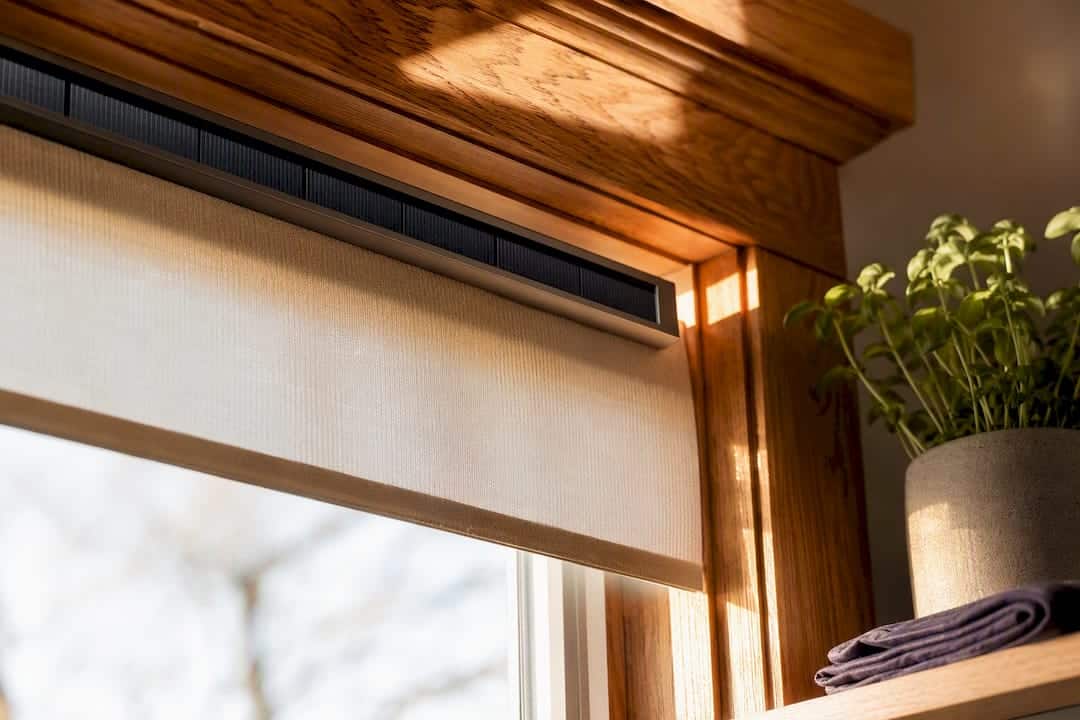
- Solar trickle-charge strips — mount on sun-facing windows to stretch time between charges, though they won’t fully revive a dead battery quickly
How Long Do Motorized Shade Batteries Actually Last?
Expect 6 to 12 months between charges on a built-in lithium-ion motor operating around two cycles a day, according to manufacturer estimates for typical residential use. Hunter Douglas pegs battery life for many PowerView systems at roughly one year under normal conditions, though the company is quick to note that number swings based on shade size and how often you’re opening and closing it.
Statistic to remember: A shade that cycles two or three times a day in a smaller window can outlast a large, heavy shade cycling six or more times a day by several months, even with identical batteries.
A few variables drive that gap:
- Shade size and weight — bigger, heavier fabrics draw more power per cycle
- Cycles per day — a scheduled shade running four times daily drains faster than one you raise once each morning
- Signal strength — weak wireless connections force the motor to work harder searching for a hub or remote
- Cold temperatures — battery capacity drops in unheated sunrooms or drafty older Bucks County farmhouses
- Age — lithium cells lose capacity gradually over 5 to 7 years, at which point the motor may need service rather than just a fresh charge
If your shades are running noticeably shorter cycles than they did a year or two ago, that’s usually aging capacity, not a defect.
How Do You Maintain and Charge Shade Batteries Correctly?
A few habits go a long way toward stretching runtime and avoiding avoidable failures.
- Reduce unnecessary cycling. Set scenes or timers instead of adjusting shades manually multiple times a day. Fewer cycles mean longer intervals between charges.
- Use the manufacturer’s charger. Somfy and Hunter Douglas both specify designated chargers and accessories for their systems, and mismatched chargers are a common cause of premature battery damage.
- Charge removable packs off the wall. Pull the pack, charge it at a counter or garage bench, then reinstall it rather than leaving the shade in a half-charged state for weeks.
- Store properly during renovations or long vacancies. Remove batteries entirely if the shade will sit unused for months, and recycle old batteries through your local household hazardous waste program rather than the trash.
Pro Tip: Never mix battery chemistries in a wand, and never try to recharge disposable alkaline cells. That combination is one of the fastest ways to damage a motor or create a safety hazard.
What Are the Signs of a Low Battery, and How Do You Replace It?
A shade doesn’t just stop dead. It usually gives you warning signs first.
- Watch for slowed movement. A shade that used to glide now crawls, which is the earliest sign a battery is losing capacity.
- Note intermittent response. If the shade responds to a remote command every third or fourth try, that’s a power issue more often than a connectivity one.
- Check for app or LED alerts. Smart-home-connected systems often flag low battery status directly in the app before the motor visibly slows.
- Replace or recharge accordingly. Swap AA wands with fresh cells of the same chemistry, recharge removable packs on their dedicated charger, or reconnect and top off an integrated motor using its designated cable.
- Troubleshoot before calling for service. Try a manual resync with the remote or hub, confirm batteries are seated in the correct orientation, and check for corrosion on contacts. If the shade still won’t respond after a fresh charge, it’s time to call a professional rather than keep guessing.
How Do You Choose the Right Power Setup for Your Windows?
The right choice depends on how you use the shade, not just what’s cheapest at checkout.
- Integrated rechargeable motors suit high-convenience custom installs, especially in living rooms or primary bedrooms where shades cycle daily
- AA or NiMH wands work well for retrofits or lower-budget rooms where occasional manual charging is acceptable
- Hardwired connections make sense for very high-use windows or year-round cold spaces, like a three-season porch, where battery capacity takes a bigger hit
Before buying replacement parts or a new motor, confirm the exact motor model, connector type, and recommended battery chemistry listed in the manufacturer’s manual. Aftermarket rechargeable packs, like certain 12.6-volt replacement packs sold on Amazon, exist for popular systems, but compatibility varies enough by motor generation that it’s worth verifying before you order.
Solar trickle-charge kits deserve a mention here too. On a south-facing window that gets strong sun most of the day, a solar strip can meaningfully stretch the interval between manual charges. It’s a supplement, not a replacement for charging, and it won’t do much for a north-facing window or a shade that’s already dead. If you’re weighing battery power against a hardwired setup, it’s worth looking at how smart home upgrades that skip major rewiring typically compare on installation effort.
A Straight Answer From Someone Who Installs These Every Week
Homeowners ask us constantly whether battery-powered shades are “worth the hassle.” Here’s the honest answer: for most custom installs in Bucks County and Mercer County homes, an integrated rechargeable lithium-ion motor beats an AA wand nearly every time. The math is simple. You’re not buying batteries every few months, and you’re not opening a headrail to fumble with cells on a stepladder.
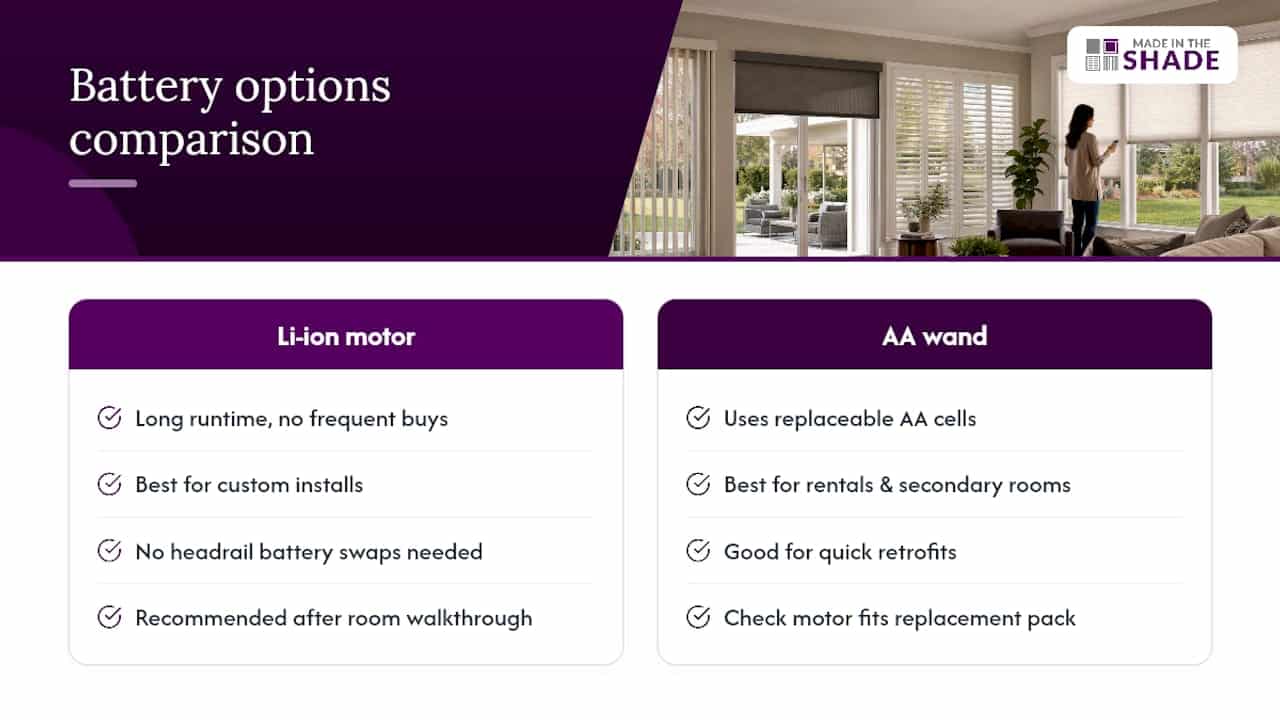
That said, AA wands still have a place. Rental-adjacent situations, budget-conscious secondary rooms, and quick retrofits on existing shades are all cases where a wand makes more sense than swapping out a whole motor. The mistake we see most often isn’t picking the “wrong” battery type. It’s picking a power option without checking what the specific motor actually supports, then wondering why a replacement pack doesn’t fit.
That’s exactly why we walk every client through their actual shades, room by room, before recommending anything.
— Tony
Get a Free In-Home Consultation for Motorized Shades
Made in the Shade Bucks County brings the showroom to your living room, so you can compare battery-powered and hardwired motorized options side by side under your own lighting before committing to anything.

A design consultant visits your home, measures every window, and walks through which power setup actually fits your usage pattern, whether that’s a high-traffic kitchen shade or a rarely touched guest room. Every consultation is free, with no obligation and no showroom to drive to.
Here’s what that visit covers:
- A free in-home consultation with sample collections brought directly to you
- Professional measurement and installation by trained technicians
- Motorized and smart-home-compatible shades that work with Alexa and other major platforms
- Cordless, child-safe lift options for homes with kids or pets
- Manufacturer warranties, most with limited lifetime coverage
If you’re weighing the long-term cost of a rechargeable motor versus a hardwired install, that’s exactly the kind of question a consultant can answer on the spot, with samples in hand. Request your free in-home consultation and get a straight answer on which power option fits your windows.
Sources
- How to Maintain Somfy Powered Batteries for Your Motorized Shades? – SomfyPro Support
- How Long Will Batteries Last in my Motorized Window Coverings? – Hunter Douglas
- Engineerskill
FAQ
What kind of batteries do motorized shades use?
Most systems use one of three approaches: built-in rechargeable lithium-ion motors, external AA or NiMH battery wands, or hardwired DC power, with lithium-ion motors offering the longest runtime and least maintenance.
How long does the battery in a motorized shade typically last?
Many built-in rechargeable systems run 6 to 12 months between charges under typical daily use, though Hunter Douglas estimates closer to one year for many PowerView configurations depending on shade size and cycle frequency.
How do I replace the batteries in my motorized shade?
Slide out an AA wand and swap the cells for fresh ones of the same chemistry, or remove a rechargeable pack and charge it on its dedicated charger before reinstalling; integrated motors typically reconnect to a charging cable without removing any hardware.
How often do you change batteries in motorized blinds?
AA wands generally need new batteries every few months depending on cycle count, while rechargeable packs and built-in lithium motors need recharging roughly every 6 to 12 months rather than a full replacement.
Should I choose a rechargeable motor or a battery wand?
For daily-use custom installs, a rechargeable motor cuts down on maintenance significantly; a battery wand still makes sense for retrofits or lower-use rooms where occasional manual charging isn’t a burden, something a free in-home consultation with Made in the Shade Bucks County can help you decide room by room.

