

Manual outdoor shades typically run $200 to $800 per opening installed, while motorized versions land between $800 and $2,500 for a comparable size, with premium multi-drop systems climbing to several thousand dollars. Size and motorization drive most of that spread, since a bigger motor and wider fabric span cost more in both hardware and labor. The fastest way to nail down your real number: measure your openings and request a free in-home consultation for an itemized quote.
TL;DR:
- Manual shades for small openings (around 3×5 feet) typically cost $200 to $400 installed, while larger spans (12×8 feet) can reach $700 to $1,200.
- Motorized shades for similar sizes usually range from $800 to $2,500, depending on hardware, control system, and number of drops, with larger systems exceeding that in premium setups.
- Fabric quality, wind ratings, and hardware options significantly impact the final price, with higher-grade fabrics and wind-resistant hardware adding to costs.
- Installation expenses vary based on mounting height, site complexity, and electrical requirements, often totaling $400 to $1,800 per opening, plus permit fees.
- A free in-home consultation, including measurements, fabric samples, and a detailed quote, is the best way to determine the specific cost for your patio.
Table of Contents
- How Much Do Outdoor Shades Cost by Size and Type?
- What Factors Actually Change Your Quote?
- What Does Installation Actually Cost?
- Manual vs. Motorized: Which One Is Worth the Extra Cost?
- Why an In-Home Consultation Prevents Cost Surprises
- What About Warranty, Lifespan, and Long-Term Costs?
- How to Budget and Get an Accurate Estimate
- Where Should You Actually Spend Your Budget?
- Get an Exact Price With a Free In-Home Consultation
- Sources
- FAQ
How Much Do Outdoor Shades Cost by Size and Type?
Pricing on outdoor shades scales with two things above all else: how wide the opening is, and whether you’re paying for a motor. A narrow side patio and a full rear deck span will land in completely different price tiers even with identical fabric.
For manual, crank-operated shades, a small opening around 3×5 feet typically costs $200 to $400 installed. A mid-size 8×6-foot opening, the most common patio configuration in Bucks County backyards, runs $400 to $700. Go big, to a 12×8-foot span or larger, and manual shades commonly reach $700 to $1,200 once you factor in reinforced hardware to handle the wider fabric run.

Motorized shades follow the same size curve but add the cost of a motor, wiring or battery pack, and a control system. Vendor pricing for motorized systems for similar openings commonly ranges $800 to $2,500 per opening, with large multi-drop installations across several openings scaling into the thousands. Manual retractable awnings often land in the $300 to $800 range, while motorized versions of the same product commonly run $800 to $2,500.
Looking at cost per square foot gives you another way to sanity-check a quote. Material and motor costs for motorized shades commonly fall between $20 and $60 per square foot, with full installed projects ranging anywhere from $1,200 for a small single opening to $10,000 for a large, premium multi-zone patio setup. That per-square-foot number is a useful shorthand, but it shouldn’t be the only thing you compare, since labor and hardware costs vary a lot depending on your specific site.
| Opening size | Manual shade (installed) | Motorized shade (installed) |
|---|---|---|
| Small (3×5 ft) | $200–$400 | $800–$1,200 |
| Medium (8×6 ft) | $400–$700 | $1,200–$1,800 |
| Large (12×8 ft) | $700–$1,200 | $1,800–$2,500+ |
Here’s what those numbers look like on real projects:
- A single 8×6-foot patio opening with a manual shade and standard fabric costs a moderate amount all in.
- A full-width rear patio with three motorized drops, hardwired controls, and wind-rated hardware can cost several thousand dollars total, in line with the higher-end installed range vendors report for premium motorized patio shade systems.
Awning installation data tells a similar story on the standalone-awning side, where the average project runs $1,455 to $4,657, with most homeowners spending around $3,045, and motorized awnings often costing significantly more than manual models. If you’re comparing quotes from different providers, always ask whether the number quoted is per opening or per square foot, and whether it includes the motor, mounting hardware, and labor, or just the fabric.
What Factors Actually Change Your Quote?
Two identical-looking shades can carry very different price tags depending on fabric grade, wind rating, and controls. Understanding these levers helps you decide where to spend and where to save.
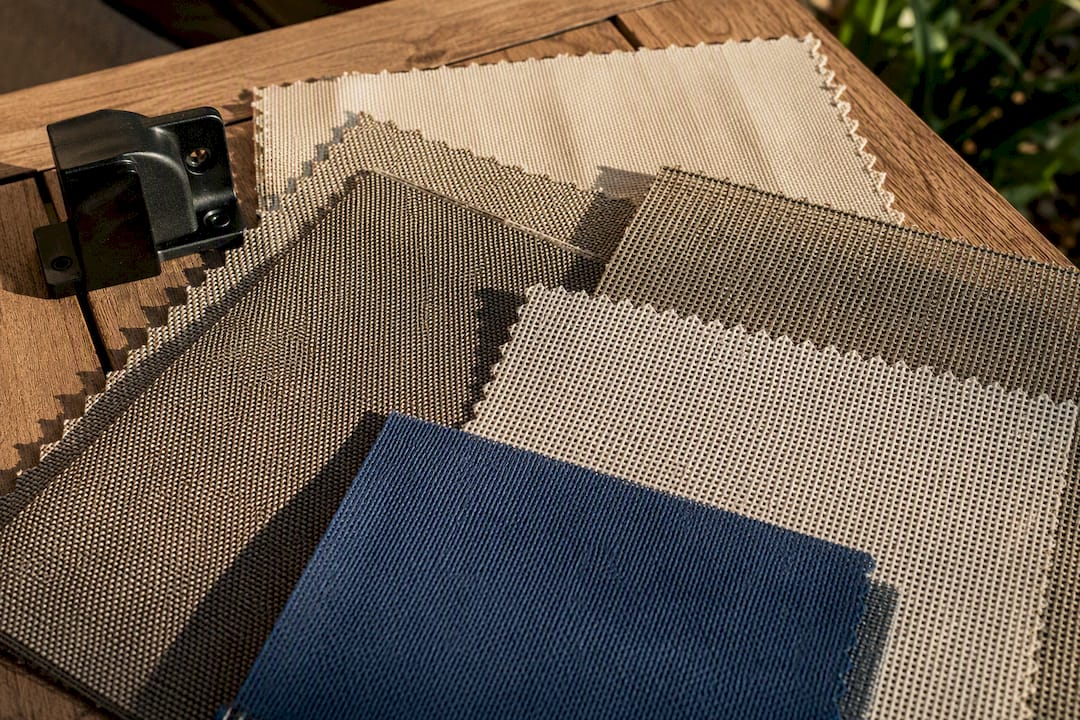
Fabric and openness percentage. Outdoor shade fabric is rated by openness percentage, which describes how much light and airflow passes through the weave. A tighter weave (lower openness percentage) blocks more UV and heat but costs more per yard and can trap more wind load, sometimes pushing you toward heavier-duty hardware. A looser, more breathable fabric costs less upfront but offers less glare and heat control on a west-facing patio. Premium solution-dyed or fade-resistant fabrics also add to the base price compared to standard vinyl or polyester blends.
Wind rating and side tracks. If your patio is exposed, elevated, or in a spot that catches wind off an open yard, you’ll want a wind-rated system with side tracks or a zipper-track design that locks the fabric edges in place. This hardware upgrade adds cost but prevents the fabric from billowing, tearing, or popping out of its track during a storm. Homeowners near open fields or on second-story decks should ask specifically about wind ratings before signing a quote.
Motor type. Motorization comes in a few flavors, and each has a different price footprint:
- Hardwired AC motors are the most common for permanent installations and tend to sit in the middle of the motorized price range, but they require an electrician to run power to the mounting point.
- Battery-powered motors skip the wiring cost and are popular for retrofit projects, though batteries need periodic recharging or replacement.
- Solar-charged motors add an upfront cost for the solar panel but eliminate ongoing battery swaps, which can appeal to homeowners who want a maintenance-light setup.
Hardware, finish, and accessories. Bracket and headrail finish (bronze, white, custom color-matched to your trim) can add a modest premium over standard finishes. Add-ons like wind sensors, sun sensors, and extra remotes each add incrementally to the total, and integrating with a smart home hub for voice control through Alexa or similar platforms typically adds a bit more on top of a standard motor package.
Pro Tip: Ask any installer for a physical fabric swatch and the wind rating spec sheet before you sign a quote. Fabric that looks fine in a photo can behave very differently once it’s stretched across a 12-foot opening on a breezy afternoon, and a swatch you can hold tells you far more than a screen ever will.
What Does Installation Actually Cost?
Labor is where a lot of homeowners get surprised, mostly because it depends heavily on what your patio structure already looks like. A straightforward mount to an existing fascia board with easy ladder access costs far less in labor than a job requiring scaffolding, structural reinforcement, or new electrical runs.
Standard installation labor for a manual shade typically adds a modest flat fee to the material cost, while motorized installations cost more because they involve mounting the motor housing and running power or verifying battery access. If your motor is hardwired, you’ll need a licensed electrician to bring power to the mount point, which is a separate line item from the shade installer’s labor.
A few things that commonly stretch out labor and cost:
- Mounting height above 10 feet, which often requires scaffolding instead of a standard ladder.
- Existing trim or fascia that needs reinforcement before hardware can be securely anchored.
- Multiple openings on one wall that need a continuous, aligned header for a clean look.
- HOA architectural review, which some Bucks County and Mercer County communities require before exterior changes, including shade or awning installs.
Permit requirements vary by municipality, and fees commonly run $25 to $100 where a permit applies. Some energy-efficiency-focused shading projects may also qualify for local rebates worth checking through the DSIRE database of state incentive programs.
From initial measurement to finished installation, plan for several weeks rather than a couple of days. Custom fabric typically needs to be manufactured to your exact opening dimensions, and that lead time, combined with scheduling a trained installation crew, is why most projects run four to six weeks start to finish.
Manual vs. Motorized: Which One Is Worth the Extra Cost?
The upfront price gap between manual and motorized is real and worth seeing in concrete numbers. On the same 8×6-foot opening, a manual shade might run $400 to $700 installed, while the motorized version of that identical shade runs $1,200 to $1,800. That’s roughly $700 to $1,100 more for the motor, controls, and mounting.
Whether that premium is worth it comes down to how you actually use the space. Here’s a simple way to think through it:
- Frequency of use. If you’re raising and lowering the shade daily to chase shade or block afternoon glare, a motor removes the friction that leads people to just leave a manual shade down (or up) permanently, missing half its benefit.
- Span size. Wide or heavy fabric spans get genuinely difficult to crank by hand. Anything approaching a 12-foot width benefits significantly from motorized assistance.
- Smart home integration. If your household already runs lights, thermostats, or locks through Alexa or a similar platform, adding shades that work with cordless, child-safe motorized controls fits into a routine you’ve already built.
- Long-term convenience value. Motorized systems often justify their higher upfront cost through fewer manual adjustments and, when paired with an automated schedule, potential energy savings from reduced solar heat gain during peak sun hours.
A useful budgeting rule: if you’re operating the shade more than a few times a week, or the opening is wider than about 10 feet, the motorized premium tends to pay for itself in convenience within the first couple of seasons. For occasional-use, smaller openings, manual hardware is a perfectly sound, lower-cost choice.
Maintenance also factors into total cost of ownership. Manual systems have fewer parts to service, but the crank mechanism and gears can wear over years of regular hand operation. Motorized systems shift that wear to the motor itself, which is why manufacturer warranty coverage on the motor component matters as much as the fabric warranty when you’re comparing quotes.
Why an In-Home Consultation Prevents Cost Surprises
Every one of the ranges above is a starting point, not a final number, because your actual quote depends on your specific openings, sun exposure, and home style. That’s exactly the gap a free in-home consultation is built to close.
Made in the Shade Bucks County brings sample fabrics and hardware finishes directly to your home rather than asking you to picture them from a catalog photo. Seeing a fabric’s actual openness percentage against your own patio’s light, at the time of day you’ll actually use the space, tells you far more than a showroom display ever could. An on-site sample and measurement can change a quote materially, since fabrics that look identical under store lighting can behave very differently on a sunny, west-facing deck.
Professional, on-site measurement also cuts down on the change orders and surprise add-ons that inflate a final bill. When a trained installer measures your exact opening, checks your mounting surface, and confirms wind exposure before the order goes in, you avoid the costly rework that happens when a shade arrives sized for an assumption instead of your actual wall.
What this looks like in practice for Bucks County and Mercer County homeowners:
- A design consultant brings fabric and hardware samples to your home at no cost.
- Openings are measured on-site, accounting for trim, mounting surface, and wind exposure.
- Motorized and smart-home-compatible options, including systems that work with Alexa and other major platforms, are available alongside cordless, child-safe manual options.
- Installation is handled by trained professionals, with manufacturer warranties backing the products selected.
What About Warranty, Lifespan, and Long-Term Costs?
The sticker price on a shade quote is only part of the real cost picture. What breaks down after year three, and who covers it, matters just as much.
Fabric typically wears out faster than hardware or motors, especially on south and west-facing patios that see direct sun for most of the day. Solution-dyed, fade-resistant fabrics cost more upfront but tend to hold their color and structural integrity longer than basic printed vinyl, which can mean fewer fabric replacements over the shade’s lifespan.
Motors are the other long-term variable. A motor failure years into ownership is a far more expensive repair than a fabric replacement, which is why the strength of the manufacturer warranty on the motor component deserves as much attention as the fabric warranty when comparing quotes. Products backed by generous manufacturer warranties, including options with limited lifetime coverage, shift a meaningful amount of long-term risk away from the homeowner.
Total cost of ownership also includes maintenance. Manual systems need occasional lubrication of the crank mechanism, while motorized systems benefit from a periodic check of battery health or wiring connections. Neither is expensive to maintain, but skipping it for years is how small issues turn into full replacements. When you’re comparing an inexpensive quote against a pricier one, ask what’s covered under warranty and for how long. That answer often matters more than the sticker price itself.
How to Budget and Get an Accurate Estimate
Start with real measurements, not guesses. Measure the width and height of every opening you’re considering, and note anything unusual: uneven trim, an obstruction near the mount point, or a wall material that might need reinforcement. Rough numbers lead to rough quotes.
Next, get your hands on actual fabric samples before committing to a look or opacity level. A swatch held up against your patio at 4 p.m. on a sunny day tells you more about glare and heat control than any online product photo. This is also the point where you should ask about wind ratings if your patio is exposed or elevated.
Finally, insist on a written, itemized quote before signing anything. A solid quote breaks out fabric and hardware cost, motor and control cost if applicable, labor, and any permit fees separately, so you can see exactly where your money is going and compare it apples to apples against another bid. If a quote is a single lump number with no breakdown, ask for the itemization. That’s a reasonable request, and any installer confident in their pricing should be able to provide it on the spot.
The most efficient way to get all three of these pieces at once, measurements, samples, and a written quote, in a single visit is a free in-home consultation, where a design consultant handles the measuring and brings the fabric options directly to you.
Where Should You Actually Spend Your Budget?
If you’re trying to decide where your money makes the biggest difference, invest in fabric quality and wind-rated hardware before you invest in a fancier motor. A durable, correctly openness-rated fabric on solid hardware will outlast a cheaper fabric paired with premium motorization, and it’s the fabric that takes the sun damage year after year.
Motorization earns its premium on large spans, patios used daily, and homes already wired into a smart ecosystem. For a small, occasional-use opening, a well-built manual shade is money well spent elsewhere in the project. As a rule of thumb: if the opening is wider than 10 feet or you’ll operate it several times a week, motorization tends to earn back its cost in convenience within a couple of seasons.
Whichever direction you lean, get an itemized written quote before deciding. A proper quote, backed by an in-home measurement, is what turns these budget ranges into a number you can actually trust.
— Tony
Get an Exact Price With a Free In-Home Consultation
Every range in this guide gives you a starting budget, but the only way to know your real number is to get your specific openings measured. Made in the Shade Bucks County’s free in-home consultation brings fabric and hardware samples straight to your Bucks County or Mercer County home, so you can see how a shade actually looks and performs on your own patio before committing to anything.

The visit includes on-site measurement of your openings, a look at motorized and smart-home-compatible options that work with Alexa and other major platforms, and cordless, child-safe manual choices if you’d rather skip the motor altogether. You’ll walk away with a written, itemized quote, not a rough guess, and every installation is handled by trained professionals with manufacturer warranties backing the products you choose. If you’re ready to trade estimate ranges for a firm number, request your free in-home consultation and get your patio measured this season.
Sources
- How Much Does It Cost to Install an Awning? 2025 Data — HomeAdvisor
- Motorized Patio Shades Price Guide — CurrentCost
- Motorized Solar Screens vs Manual Patio Shades DFW Guide 2026 — Complete Elite Technologies
- Manual vs Motorized Retractable Awnings: What Impacts Total Cost of Ownership — MAODEShading
FAQ
What is the average cost of patio shades?
Manual patio shades typically cost $200 to $800 per opening installed, while motorized versions of similar size run $800 to $2,500, with size and motor choice driving most of the difference.
How much does it cost to install outdoor shades?
Installation cost depends on opening size, motor type, and site access, but most homeowners spend $400 to $1,800 all in per opening, plus permit fees of roughly $25 to $100 where required.
How much do outdoor blinds typically cost?
Outdoor blind-style shades follow the same pricing bands as other outdoor shades, generally $200 to $700 for manual operation and $800 to $2,500 for motorized versions of a comparable size.
What is the estimated cost of outdoor motorized shades?
Motorized outdoor shades commonly range from $800 for a small single opening to $2,500 or more per opening, with premium multi-drop patio systems reaching several thousand dollars for a full installed project. A free in-home consultation from Made in the Shade Bucks County can turn that range into an exact, itemized quote for your specific patio.

