

For most homeowners, solution-dyed acrylic is the best awning fabric because it balances colorfastness, breathability, and durability better than any other option on the market. If your patio floods in heavy storms or acts as a rain-shedding roof, a PVC or vinyl-coated membrane earns its extra weight. If you just want airflow and sun relief over a pergola or deck, HDPE mesh does that job at a lower cost. A free in-home consultation from Made in the Shade Bucks County can help you confirm which one fits your house and your budget.
TL;DR:
- Solution-dyed acrylic offers the best UV resistance and colorfastness, typically lasting 8 to 15 years, making it ideal for most residential uses.
- PVC-coated polyester provides genuine waterproofing and easy cleaning, but is heavier and traps more heat, suitable for rain-shedding structures.
- Polyester fabrics are the most affordable with faster fading, usually needing replacement within 3 to 5 years, and are less suitable for prolonged sun exposure.
- HDPE mesh is best for high airflow and UV blocking but is not waterproof, making it suitable for shade-only applications like pergolas.
- Proper installation, including correct pitch and wind sensors, significantly impacts fabric longevity, especially for motorized, retractable awnings.
Table of Contents
- What Are the Main Awning Fabric Types?
- How Do Awning Fabrics Compare on Performance?
- Which Fabric Fits Your Climate and Awning Style?
- How Do You Clean and Maintain Awning Fabric?
- What Should You Ask Before Choosing a Fabric?
- How Made in the Shade Bucks County Helps You Choose
- Why We Point Most Homeowners Toward Solution-Dyed Acrylic
- Ready for a Free In-Home Awning Consultation?
- Sources
- FAQ
What Are the Main Awning Fabric Types?
Walk into any showroom conversation about awning fabric types and you’ll hear four or five names repeated: acrylic, vinyl, polyester, canvas, and mesh. Each one is built differently, and that construction is what drives everything else, from how long it lasts to how it feels against your hand on a humid July afternoon.
Solution-dyed acrylic is the material most premium awnings are built from, and the “solution-dyed” part matters more than most buyers realize. Instead of weaving plain fiber and dyeing the finished cloth, manufacturers mix color pigment directly into the acrylic solution before it’s extruded into fiber. The pigment lives inside the strand, not just on its surface, which is why cut edges and worn spots keep their color instead of showing a faded, chalky line the way surface-dyed fabrics do.
PVC-coated (vinyl) polyester takes a woven polyester scrim and laminates it with a plastic coating, similar in concept to a truck tarp or a boat cover. That coating makes the fabric essentially waterproof and easy to wipe down, but it also adds weight and seals off airflow through the weave.
Polyester (piece-dyed) is woven first and colored afterward, on the surface of the finished cloth. It’s the budget entry point in awning fabric types, and the tradeoff shows up in how it ages.
Canvas, made from cotton or a cotton-acrylic blend, is the traditional look many older Bucks County homes still carry on their storefronts and porches. It breathes beautifully but needs more upkeep than synthetic weaves.
HDPE knitted mesh, the same family of material used in shade cloth and privacy screens, is a specialty option worth knowing:
- Knitted from high-density polyethylene tape rather than woven like the others
- Built with intentional gaps that let wind, light, and rain pass through
- Sized by “shade factor,” not waterproofing, since it’s not meant to keep you dry
- Often paired with fiberglass-core coated textiles on commercial jobs needing extra structural stability
How Do Awning Fabrics Compare on Performance?
Once you know what each fabric is made of, the real decision comes down to four things: how well it resists sun damage, how it handles water, how comfortable it feels underneath, and how much upkeep it demands.
UV resistance and colorfastness. Solution-dyed acrylic wins this category outright. It typically delivers several years of service in full sun, and lines from major mills often carry 10-year residential warranties. Piece-dyed polyester, by contrast, tends to visibly fade within 3 to 5 years under the same exposure, since its color sits only on the surface.
Water resistance versus true waterproofing. This distinction trips up a lot of buyers. Acrylic sheds a normal rain shower reasonably well but is not built to serve as a watertight roof. PVC-coated polyester is genuinely waterproof, which is why it shows up on fixed patio covers and canopy-style structures where water has to be fully redirected.
Breathability and comfort. Woven acrylic lets air move through the weave, which keeps the space underneath noticeably cooler than vinyl does. Coated PVC blocks that airflow, trapping heat and making a patio feel warmer on a still August afternoon, even in the shade.
Stain resistance and cleaning. PVC’s non-porous surface repels spills and wipes clean fast, a real advantage for anyone grilling often or running an outdoor kitchen near the awning. Acrylic resists most stains too, but ground-in dirt calls for a gentle brush and mild soap rather than a quick wipe.
Quick comparison at a glance:
- Solution-dyed acrylic: best UV resistance, breathable, moderate cleaning needs
- PVC-coated polyester: fully waterproof, easiest to wipe clean, traps heat
- Polyester: lowest upfront cost, fastest fading, needs re-coating
- HDPE mesh: highest airflow, blocks up to roughly 90% of UV, not water resistant
Which Fabric Fits Your Climate and Awning Style?
The right choice depends less on brand names and more on what your patio actually deals with each season. Here’s how to match awning fabric types to real conditions around greater Philadelphia.
-
Hot, sun-exposed decks and south-facing patios. Solution-dyed acrylic is the clear pick. Its fade resistance holds up through a full Pennsylvania summer, and its breathability keeps the space below noticeably more livable than a sealed vinyl panel would.
-
Wet climates or awnings acting as a roof. When an awning has to shed water like a true roof, whether over a screened-in terrace or a covered walkway, specify a water-repellent acrylic series or move to a PVC-coated membrane, and confirm the actual pitch before finalizing the design.
-
Humid stretches, like a typical Delaware Valley August. Mildew resistance and airflow matter more here than raw waterproofing. Acrylic’s breathable weave dries faster after a storm than a sealed coating does, cutting down on mildew risk.
-
Windy or exposed decks with retractable arms. Avoid heavy coated vinyl on any folding mechanism. The added weight increases stress on the arms and motor and accelerates coating failure at fold points over time. Lighter acrylic folds cleanly and puts less strain on the hardware, a point worth reviewing alongside wind rating guidance before you commit to a retractable system.
-
Storefronts, RV awnings, and shade-only pergolas. Commercial storefronts often lean on PVC for its wipe-clean surface and waterproofing. RV awnings typically use lighter acrylic or vinyl laminates built for repeated rolling. Pergolas and carports where you just want relief from direct sun are the one place HDPE mesh genuinely shines.
How Do You Clean and Maintain Awning Fabric?
Fabric choice determines how much weekend maintenance you’ll actually sign up for, and the habits that extend fabric life are mostly the same across materials.
- Acrylic: brush off debris regularly, hose down monthly, and use a mild soap solution with a soft brush for grime. Rinse thoroughly and air-dry fully before retracting.
- PVC/vinyl: wipe clean with soapy water; avoid solvents that can degrade the coating over time.
- Polyester: clean gently and expect to reapply a water-repellent treatment periodically as the factory coating wears off.
- HDPE mesh: rinse with a garden hose; it dries fast and rarely holds dirt in the knit.
The single biggest mistake homeowners make with any fabric type is retracting an awning while it’s still wet. Trapped moisture in the folds is what actually causes mildew and premature wear, not the fabric itself.
Pro Tip: Give your awning ten to fifteen minutes of open-air drying time after a rain shower before retracting it. That habit alone can add years to almost any fabric type.
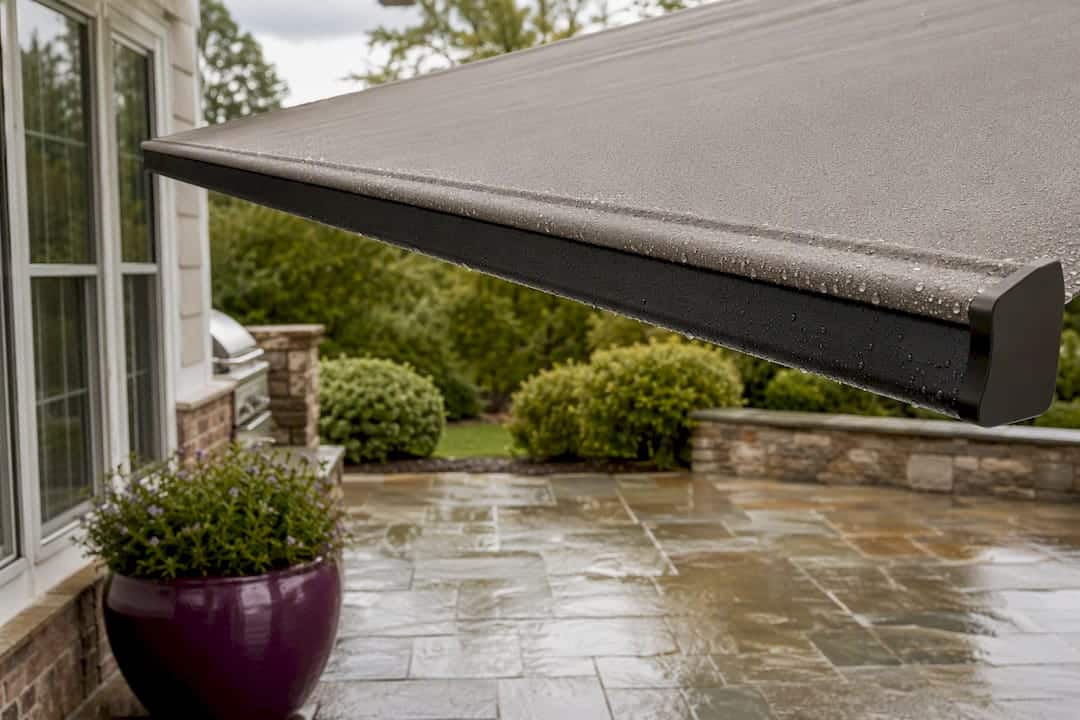
Most acrylic fabrics realistically last 8 to 15 years before the color or coating starts to noticeably fade, while polyester tends to need replacement closer to the 3 to 5-year mark. If you’re only seeing surface fading or minor pinholes, a spot repair or professional re-coating can often buy another season before a full fabric replacement is necessary.
What Should You Ask Before Choosing a Fabric?
Before you commit to any awning fabric type, walk through this checklist with whoever is doing the installation.
Your priorities, in order:
- How will you actually use the space (dining, lounging, protecting furniture)?
- How much direct sun and rain does that spot get across all four seasons?
- How much cleaning are you realistically willing to do?
- Does the color or pattern matter as much as performance?
- What warranty coverage comes with the fabric versus the frame?
Questions worth asking an installer directly:
- What is the fabric actually composed of, acrylic, vinyl, or a blend, and who manufactures it?
- How many years does the warranty cover, and does it include fading separately from structural defects?
- Do you need a fire-retardant rating, or is standard residential-grade fabric sufficient for this project? Most homes don’t need commercial FR fabric unless local code requires it.
- What pitch and drainage does this awning need for its specific location?
- Is this fabric compatible with motorization, and does the installer recommend a wind sensor?
A trustworthy installer will bring physical samples to your home rather than asking you to choose from a catalog photo. Watch for red flags like vague warranty language or no willingness to discuss wind ratings for retractable models. Motorized and smart-home-compatible awnings add real convenience, working with with Alexa and other major platforms, but heavier coated fabrics put more stress on motors and folding arms, so lighter acrylic is usually the better match for retractable, motorized setups. Budgeting for these features often comes up alongside motorized shade costs during a consultation.
How Made in the Shade Bucks County Helps You Choose
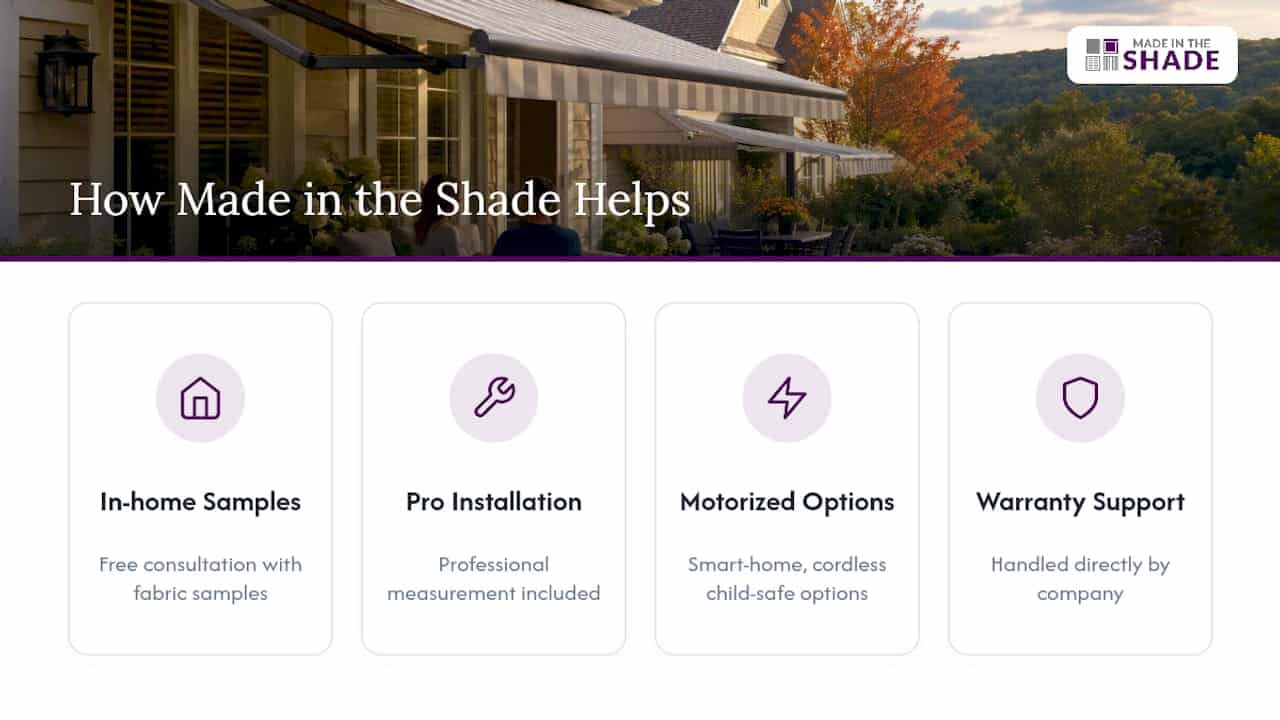
Picking between awning fabric types from a website photo is close to impossible, colors shift, textures don’t translate, and you have no sense of how a swatch actually looks against your own siding. That’s why Made in the Shade Bucks County brings sample collections directly into your home for a free consultation, with no showroom visit required. You see the acrylic, vinyl, or mesh options against your actual patio, in your actual light, before you commit to anything.
Every project includes professional measurement and installation, which matters more than most homeowners expect. A slightly wrong pitch angle or misjudged drainage point can undercut even the best fabric choice. Made in the Shade Bucks County also offers motorized and smart-home-compatible awning options, along with cordless, child-safe features for households that want convenience without sacrificing safety. Warranty support is handled directly, so you’re never left chasing down a manufacturer on your own.
Why We Point Most Homeowners Toward Solution-Dyed Acrylic
After walking through countless consultations across Bucks County and Mercer County, the pattern in what homeowners actually care about is consistent: they want color that doesn’t wash out by year three, a patio that stays comfortable in August, and a fabric they’re not scrubbing every weekend. Solution-dyed acrylic checks all three boxes better than the alternatives, which is why it comes up first in most of our conversations.
But fabric is only half the equation. I’ve seen a premium acrylic awning underperform simply because it was mounted at the wrong pitch or paired with hardware that couldn’t handle local wind gusts. Installation quality, drainage, and the right pitch matter just as much as the material itself. Motorization with a wind sensor isn’t just a convenience upgrade, either. It’s often what protects the fabric long term, since a sensor retracts the awning automatically before a gust does damage a person might not catch in time.
— Tony
Ready for a Free In-Home Awning Consultation?
Reading about awning fabric types online only gets you so far. You need to see how a solution-dyed acrylic swatch actually looks against your brick facade, or how a PVC-coated panel feels in your hand, before you spend money on either one. Made in the Shade Bucks County brings that experience to your living room instead of asking you to guess from a screen.

A design consultant arrives with real fabric samples, takes precise measurements of your space, and walks you through motorization and cordless, child-safe options on the spot, all at no cost to you. There’s no pressure to decide during the visit and no showroom to drive to beforehand. If you’re weighing a retractable awning against a fixed patio cover, this is also the moment to talk through outdoor patio shade options and get a straight answer on what fits your home’s layout and your budget. Homeowners throughout Bucks County, PA, and Mercer County, NJ, can schedule their free in-home consultation directly through Made in the Shade Bucks County and get sample swatches in hand before committing to anything.
Sources
For deeper technical detail beyond this guide, these sources are worth a look: RiserShade’s acrylic vs. vinyl breakdown for lifespan data, ShadeDocs’ textile selection guide for construction comparisons, AwningTown’s fabric guide for mesh and polyester specifics, and TepText’s technical textile blog for the fiber science behind colorfastness. If you’re also weatherproofing nearby furniture, Sitpack’s durability guide covers outdoor material wear more broadly.
- Best Retractable Awning Fabric: Acrylic vs Vinyl vs Sunbrella | 2026 Guide
- Selecting the Best Awning Textile
- Awning Fabric Types Compared | AwningTown
- Awning Fabric Guide | Sunbrella, Dickson, and Sattler Compared
FAQ
What is the best fabric for awnings?
Solution-dyed acrylic is the best all-around choice for most residential awnings, offering strong UV resistance, breathability, and typically 8 to 15-plus years of service in full sun.
What is the difference between acrylic and polyester awning fabric?
Acrylic is solution-dyed, meaning color runs through the entire fiber, while polyester is dyed on the surface after weaving. That difference is why acrylic resists fading far longer, often outlasting polyester’s typical 3 to 5-year fade window.
What is the difference between Sunbrella and Recacril fabric?
Both are solution-dyed acrylic brands with similar durability and warranty coverage; differences mostly come down to pattern libraries, weight, and handfeel rather than raw performance.
Is vinyl or acrylic better for an awning?
It depends on the job: vinyl is fully waterproof and easier to wipe clean, making it better for rain-shedding roofs, while acrylic breathes better, stays cooler underneath, and holds up better on retractable, folding awnings.
How long does awning fabric typically last?
Solution-dyed acrylic generally lasts 8 to 15 years, PVC-coated vinyl runs 3 to 8 years depending on exposure, and standard polyester often needs replacement within 3 to 5 years.

